Healing Starts With Food
How Utah Food Bank Supports Patients Facing Hunger
When someone is recovering from illness or injury, food matters.
At Utah Food Bank, we know hunger does not pause during a health crisis. For many Utahns, a hospital stay can bring treatment and answers, but it can also come with a painful question: How will I eat when I get home?
That is why partnerships between healthcare providers and Utah Food Bank matter so much. Together, we can help connect patients facing food insecurity with nourishment and resources at a critical moment.
Food Insecurity Is Affecting Patients Across Utah
Local healthcare providers are seeing more and more patients who are worried about having enough food at home.
Rising housing costs, inflation, medical bills, and other financial pressures are stretching family budgets to the breaking point. For some patients, recovery does not just mean managing their health. It also means wondering how they will feed themselves or their family after being discharged.
These moments are a reminder that hunger is not separate from health. It is deeply connected.
Why Food Matters in Recovery
Good nutrition plays an important role in healing.
When patients leave the hospital without reliable access to food, recovery becomes even harder. A lack of food can affect strength, energy, stress levels, and overall well-being. For families already under pressure, it can quickly become one more impossible burden.
At Utah Food Bank, we believe food is not a luxury. It is essential. It supports dignity, stability, and healing.
How Utah Food Bank Is Helping Hospital Patients
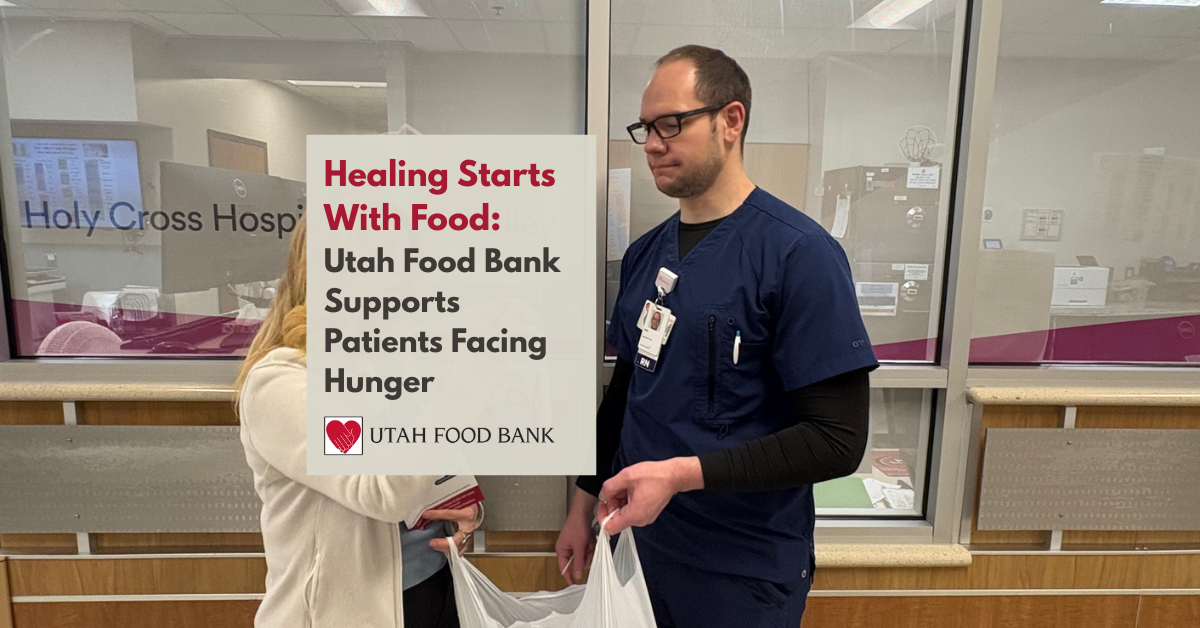
Through partnerships with healthcare providers, we are providing resources to help connect patients with food before they leave the hospital.
Patients who are identified as experiencing food insecurity can receive bags of nonperishable food to take home which will help bridge the gap between hospital discharge and longer-term support.
When patients have children or other family members at home, additional food may also be provided to support the household.
Connecting Patients with Ongoing Food Resources
Meeting an immediate need is important, but so is helping people find continued support.
That is why food bags also include information about local pantries and programs where patients can turn for additional help. Our goal is not only to provide food in the moment, but to connect Utahns with resources that can support them beyond a hospital stay.
Addressing Hunger as a Health Issue
We have long understood that food insecurity is a community issue. It is also a health issue.
Hospitals are often one of the few places where people feel safe enough to share what they are facing. When healthcare teams ask whether patients have enough food at home, they create an opportunity for meaningful support.
By working together, healthcare providers and hunger-relief organizations can care for the whole person, not just the immediate medical need.
Reaching Utahns When They Need Help Most
Partnerships like these help us reach people who may not otherwise know help is available.
For some patients, receiving a bag of food is more than nourishment. It is a sign that someone sees them, cares about what happens next, and wants to help lighten the load during a difficult time.
We are grateful for the healthcare providers and community partners who are working with us to respond with compassion and care.
Healing Starts with Food
No one should have to focus on recovery while worrying about their next meal.
Together, we can help ensure more Utahns leave the hospital with nourishment, hope, and a path to continued support.